Best Bamboo Cutting Boards 2026: A Buyer's Guide for Eco-Conscious Kitchens
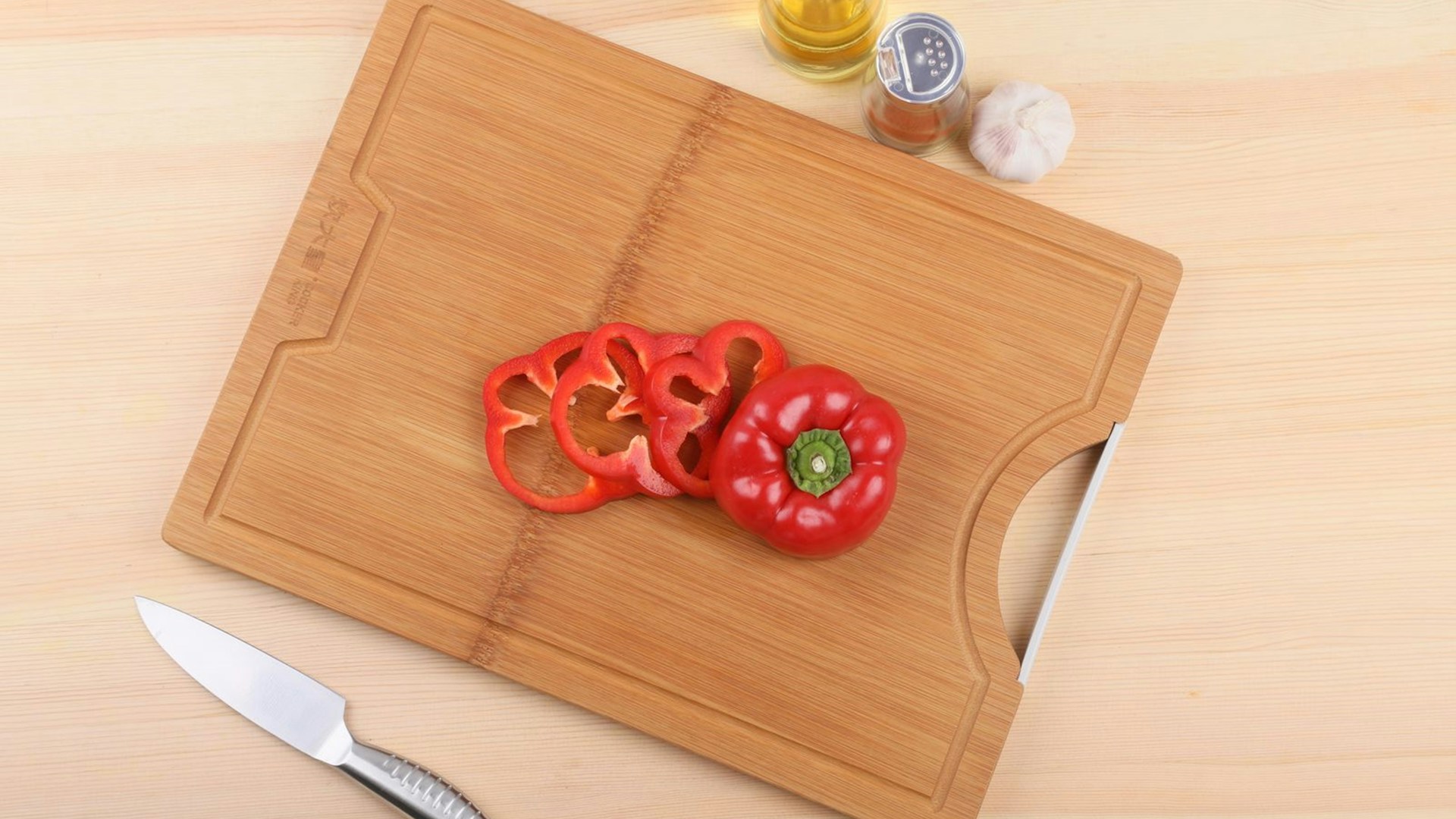
Table of Contents
A good cutting board is one of those things you use twice a day without thinking about it — until the plastic one starts showing deep gouges and you realize you’ve been scraping microplastics into every meal. Bamboo cutting boards solve that problem cleanly: they’re harder than most softwoods, gentler on knife edges than glass or ceramic, and they grow back in three to five years rather than five hundred.
This guide covers what actually matters when buying a bamboo board in 2026: grain type, thickness, finish, and whether the juice groove is deep enough to actually do its job.
End-Grain vs. Edge-Grain: The Decision That Actually Matters
Most bamboo cutting boards you’ll find are edge-grain — the stalks run horizontally across the surface. They’re flat, easy to manufacture, and reasonably durable. End-grain boards are cut from the tops of the stalks, so the fibers face upward. When a knife cuts down, it parts the fibers rather than severing them, which is why end-grain boards are self-healing for light scoring and dramatically kinder to your knives over years of use.
End-grain costs more (expect to pay $40–$90 vs. $20–$50 for edge-grain of comparable size). For a home cook who cooks daily, it’s worth it. For occasional use or a secondary board for bread and cheese, edge-grain is fine.
What to Look For
Thickness: Minimum 1.5 inches for a board you’ll use for protein. Thinner boards warp. A 2-inch board on rubber feet won’t move even when you’re breaking down a whole chicken.
Juice grooves: Depth matters more than width. Grooves shallower than 5mm fill up with liquid immediately and defeat the purpose. Run your finger along the groove in the product photos — if it looks decorative, it probably is.
Finish: Bamboo boards should arrive with a food-safe oil finish (mineral oil is standard). Avoid boards finished with shellac or synthetic varnish — they look glossy but flake over time. You’ll need to re-oil any board every two to three months anyway; mineral oil is cheap and food-safe.
No adhesives with formaldehyde: Cheap bamboo boards use urea-formaldehyde glue to bond the strips. Look for boards that specify “formaldehyde-free adhesive” or are certified by the Forest Stewardship Council (FSC). It’s a small thing, but you’re cutting food on this surface.
[!eco] Bamboo regenerates in 3–5 years compared to 25–50 years for hardwood trees. Choosing bamboo over maple or walnut cutting boards reduces forest pressure while delivering comparable or better knife performance.
Top Picks for 2026
1. Totally Bamboo Big Sur — Best Overall
The Big Sur is an end-grain board at a price that’s hard to argue with. It’s 18×12 inches, 1.75 inches thick, and the juice groove is deep enough to actually contain liquid from a resting roast. After six months of heavy use, the surface showed only the lightest surface marks, and a ten-minute sand with 220-grit paper brought it back to new.
The one honest downside: it needs conditioning out of the box. Arrive with a bottle of mineral oil and give it two coats before first use.
[!pros]
- End-grain construction is genuinely self-healing for light scoring
- Deep juice groove (7mm) actually contains liquids
- FSC-certified bamboo with formaldehyde-free adhesive
[!cons]
- Ships dry — requires conditioning before first use
- Heavy (5.2 lbs) — not ideal for those who prefer a lighter board
2. OXO Good Grips Bamboo — Best for Everyday Use
OXO’s board trades the self-healing benefits of end-grain for practicality: non-slip feet that actually grip a wet counter, a built-in handle, and a dishwasher-safe construction (top rack, short cycle). The surface is edge-grain, but the bamboo is dense enough that it holds up to regular knife work without deep scarring for 12–18 months of typical home use.
This is the board for people who want something they can clean quickly and not think about.
3. Teakhaus Composite — Best for Wet Environments
Teak is naturally high in silica and oils, which makes it more water-resistant than pure bamboo. The Teakhaus composite blends both materials to get the fast-growth credentials of bamboo with the moisture resistance of teak. If you live in a humid climate or tend to leave boards wet in the dish rack, this is worth the premium.
How to Care for a Bamboo Cutting Board
- Hand-wash only unless the board explicitly states dishwasher-safe. Heat and prolonged moisture cause warping and crack the adhesive.
- Oil every 6–8 weeks with food-grade mineral oil. Apply a thin coat, let it soak for 20 minutes, wipe off the excess.
- Never soak. A quick rinse under the tap is fine; leaving a bamboo board submerged will split it.
- Sand to restore. Light scratches and knife marks respond well to 220-grit sandpaper followed by a fresh coat of oil. Most boards can be fully restored 3–4 times over their life.
The Bottom Line
Bamboo cutting boards aren’t a compromise — they’re a genuine upgrade over plastic and a legitimate alternative to hardwood for most home cooks. The Totally Bamboo Big Sur is the best value at the premium end; the OXO board is the right call if you want something low-maintenance. Either way, you’re cutting plastic microplastics out of your cooking permanently.
Recommended Products

Totally Bamboo Big Sur Cutting Board
Editor's PickExtra-large end-grain bamboo board with deep juice grooves. Harder surface than edge-grain, self-healing to minor scratches.

OXO Good Grips Bamboo Cutting Board
Best for BeginnersNon-slip feet, built-in handle, dishwasher-safe top layer. Great for everyday prep without babying.

Teakhaus Teak & Bamboo Reversible Board
Best DurabilityTeak-bamboo composite that resists moisture better than pure bamboo. Reversible design with carved grip handles.