Best Compostable Trash Bags 2026: Do They Actually Work?
Table of Contents
Compostable trash bags occupy a strange middle ground in the sustainable home market. The concept is right: bags that break down in composting conditions instead of persisting in landfill for centuries. The execution is uneven. Some bags dissolve in humidity before you’ve even finished filling them. Others carry “compostable” labeling that refers to industrial composting at 140°F — conditions that don’t exist in a backyard pile or a home green bin.
This guide cuts through the marketing to tell you what actually matters when buying compostable bags, which certifications are meaningful, and which brands hold up in real kitchen use.
The Certification Problem
The word “compostable” on packaging is almost meaningless without a certification number. There are two standards that matter in North America:
ASTM D6400: The US standard for compostable plastics. A product bearing this certification has been independently verified to break down in industrial composting conditions within 180 days. This is the baseline. Every bag on this list meets it.
BPI Certification (Biodegradable Products Institute): A third-party verification body that independently tests products against ASTM D6400. BPI certification is harder to fake than a self-applied ASTM claim. Look for the BPI logo.
Home compostable certification: This is rarer and more meaningful for most households. The OK Compost HOME certification (European) and similar standards verify breakdown in ambient-temperature conditions — actual backyard piles and green bins. If you’re collecting food scraps for home composting, this is what you want.
[!eco] Standard plastic trash bags take 10–1,000 years to degrade in landfill conditions. Certified compostable bags break down in 90–180 days in industrial composting. Even in landfill — where composting doesn’t occur — compostable bags degrade faster than petroleum-based plastic and don’t produce microplastics.
What “Compostable” Doesn’t Mean
Compostable bags won’t save your landfill contribution if you’re using them as regular trash bags. The certification only applies when the bag actually reaches a composting facility or home compost pile. If your municipality doesn’t accept compostable bags in organics collection (many do, but some don’t — check before buying), the environmental benefit disappears.
The best use case: compost collection. Use compostable bags specifically to line your kitchen compost bin. The bag and its contents go into your green bin or backyard pile together.
Durability: The Real-World Test
Most compostable bags are made from PLA (polylactic acid, derived from corn starch) or PBAT (polybutylene adipate terephthalate, a biodegradable synthetic). Neither material has the tensile strength of HDPE plastic, which means failures happen in two ways:
- Moisture degradation: The bag starts breaking down before you’ve emptied it, especially in humid climates or if the bag sits wet for more than a few days.
- Point stress: The base seams split when lifting a full bag. Thin bags (under 0.7 mil) are particularly prone to this.
[!pros]
- Eliminates plastic bag contribution from compostable waste stream
- BPI and ASTM D6400 certified options break down in commercial composting in under 180 days
- No microplastic generation during degradation
[!cons]
- Shorter shelf life — store in a cool, dry place (not under the sink in a damp cabinet)
- Won’t hold wet waste for more than 3–5 days before moisture compromise begins
- More expensive per bag than conventional plastic (roughly 2–4× the cost)
Top Picks for 2026
BioBag 3-Gallon — Best for Compost Collection
BioBag is the benchmark in this category for good reason. The 3-gallon size is designed specifically for countertop kitchen compost bins — the ones that sit next to your sink and get emptied into a larger bin every 2–3 days. The bags are made from Mater-Bi, a bioplastic derived from vegetable oils and starches. They handle typical food scraps (vegetable peels, coffee grounds, eggshells) without softening noticeably over a 3-day window.
Don’t store these where humidity exceeds 70%. A cool pantry shelf or the original sealed packaging works well.
Unni 13-Gallon — Best for Full Kitchen Bin
If you’re lining a full-size kitchen bin, the Unni 13-gallon bags at 0.85 mil are the thickest widely available option. The extra thickness matters at the handle points — where thinner bags consistently fail when you pick up a full bag. The Unni bags have held 10+ lbs of waste in testing without base seam failure, which puts them ahead of most competitors in this size.
If You Care 13-Gallon — Best for Supply Chain Transparency
If You Care publishes their full supply chain. The bags are manufactured in Europe from potato starch and vegetable oils, and the company provides third-party verification of their raw material sources. For buyers who care about where the “bio” in bioplastic actually comes from, this level of transparency is unusual and worth paying a small premium for.
Storing Compostable Bags Correctly
Compostable bags begin breaking down when exposed to heat and humidity. Store them:
- In a cool, dry location (60–75°F, under 60% humidity)
- In their original sealed packaging until use
- Away from under-sink cabinets, which are typically warm and humid
Properly stored bags will remain usable for 12–18 months. Improperly stored bags start showing brittleness and stress cracking within weeks.
The Bottom Line
Compostable trash bags work — with two conditions: buy certified (ASTM D6400 minimum, BPI preferred), and actually use them for compostable waste that will reach a composting facility or home pile. Used that way, they’re a meaningful reduction in your plastic footprint. Used as a substitute for regular trash bags going to landfill, the environmental benefit is minimal.
Recommended Products

BioBag Compostable 3-Gallon Food Scrap Bags (100-count)
BPI CertifiedASTM D6400 certified, certified by the Biodegradable Products Institute. Holds moisture without leaking for 3–5 days. Best for kitchen compost collection.

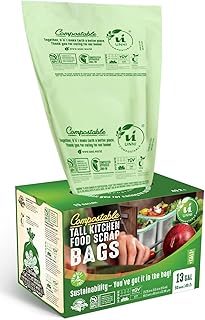
Unni ASTM D6400 Compostable Bags 13-Gallon (100-count)
Best Large SizeFull kitchen-bin size, 0.85 mil thickness — heavier than most competitors. Holds 8–10 lbs without splitting at the base.
If You Care Certified Compostable Trash Bags 13-Gallon
Transparent Supply ChainMade from potato starch and vegetable oils. Strong handles, decent moisture resistance. European-manufactured with transparent supply chain.